Trilobites
Survivors from the past through 300 million years
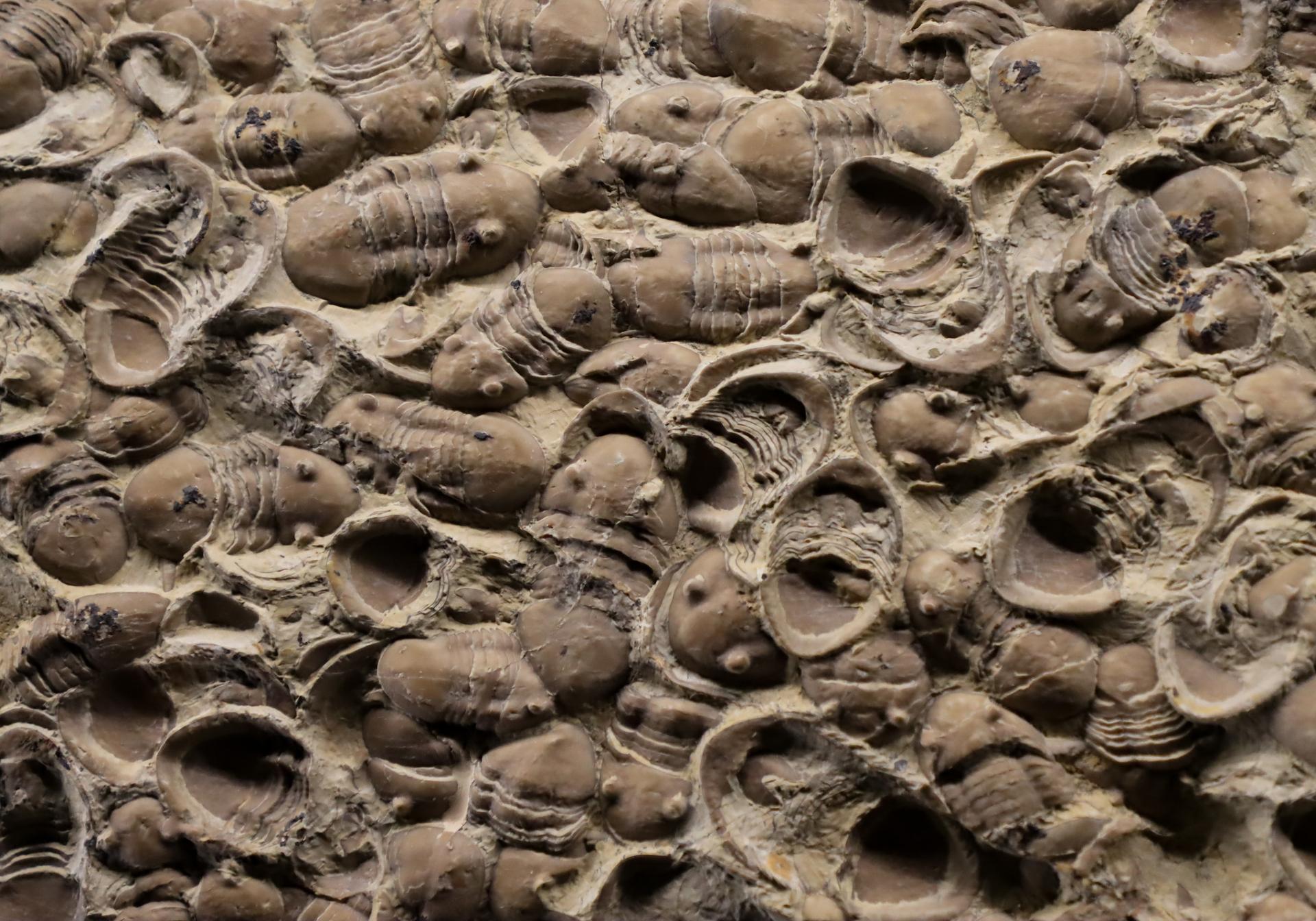
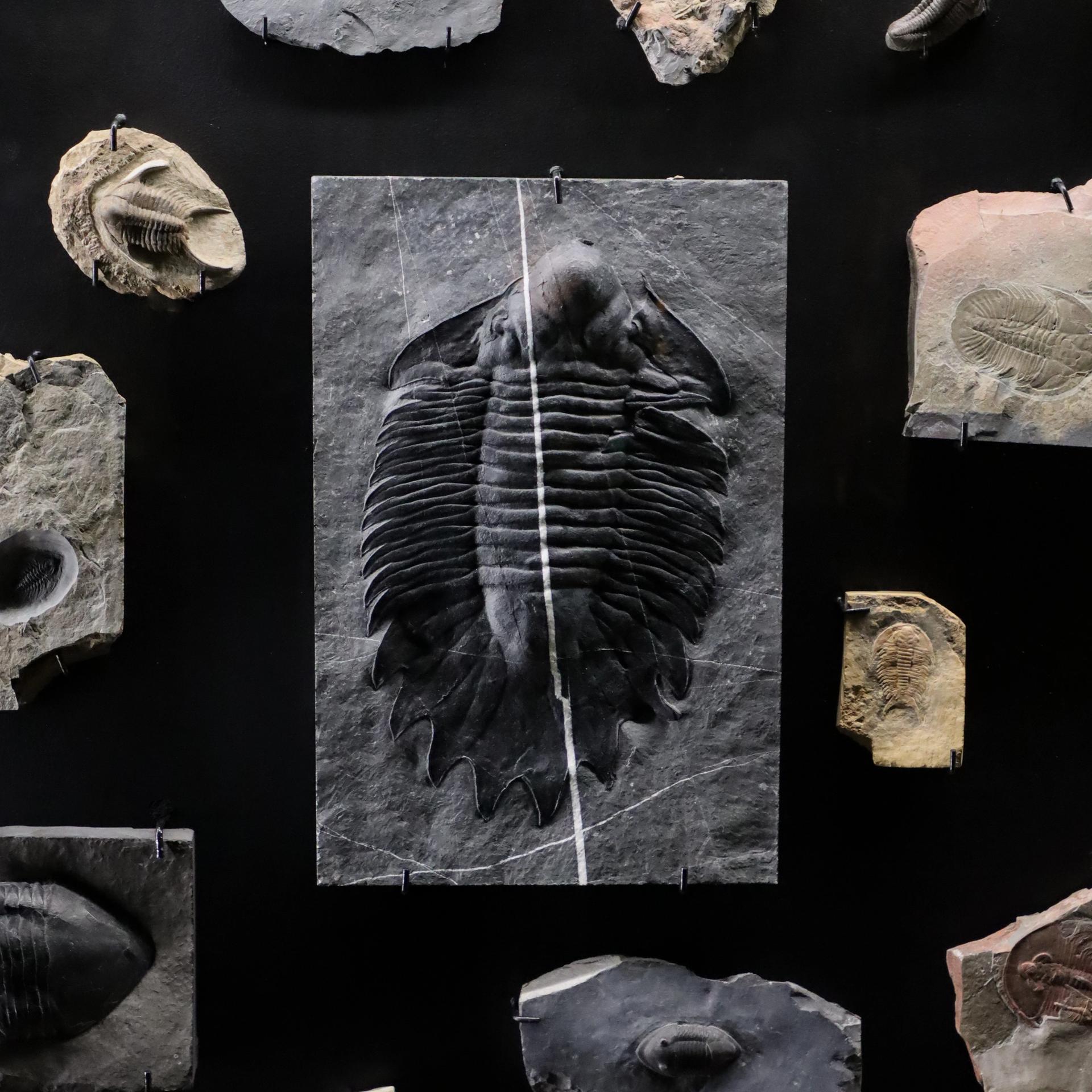
Just over half a billion years ago, trilobites appeared. It was a time when Denmark lay south of the Equator and fish did not yet exist.
The trilobites lived for almost 300 million years and spread to all the world’s oceans. They managed to survive several mass extinctions and today are practically the definition of evolution, adaptation, and survival in the animal kingdom.
They were the first animals to develop eyes and thus saw the world for the very first time. They learned to exploit all the niches in the vast oceans. Some evolved spines as protection against the newly emerged predators. Others learned to burrow into the seabed. Or curled themselves up to avoid being eaten.
Their demise came at the end of the Permian period 252 million years ago, when a massive increase in CO₂ led to intense global warming and acidification of the world’s oceans. Ninety-five percent of all marine life went extinct, including the trilobites.
More than 100 fantastic, genuine specimens are on display – from North America, Africa, Greenland, Denmark, and the rest of Europe. The exhibition is based on a large private donation of Nordic trilobites from amateur paleontologist Vagn Aage Andersen, unique Danish and Greenlandic specimens on loan from the Natural History Museum of Denmark in Copenhagen, trilobites from our own excavations, as well as acquisitions and donations from abroad.
Facts about Trilobites
Size: From 1 mm up to 85 cm.
Period: 520 million years ago - 252 million years ago.
Habitat: The harbors.
Locations: All around the globe.